
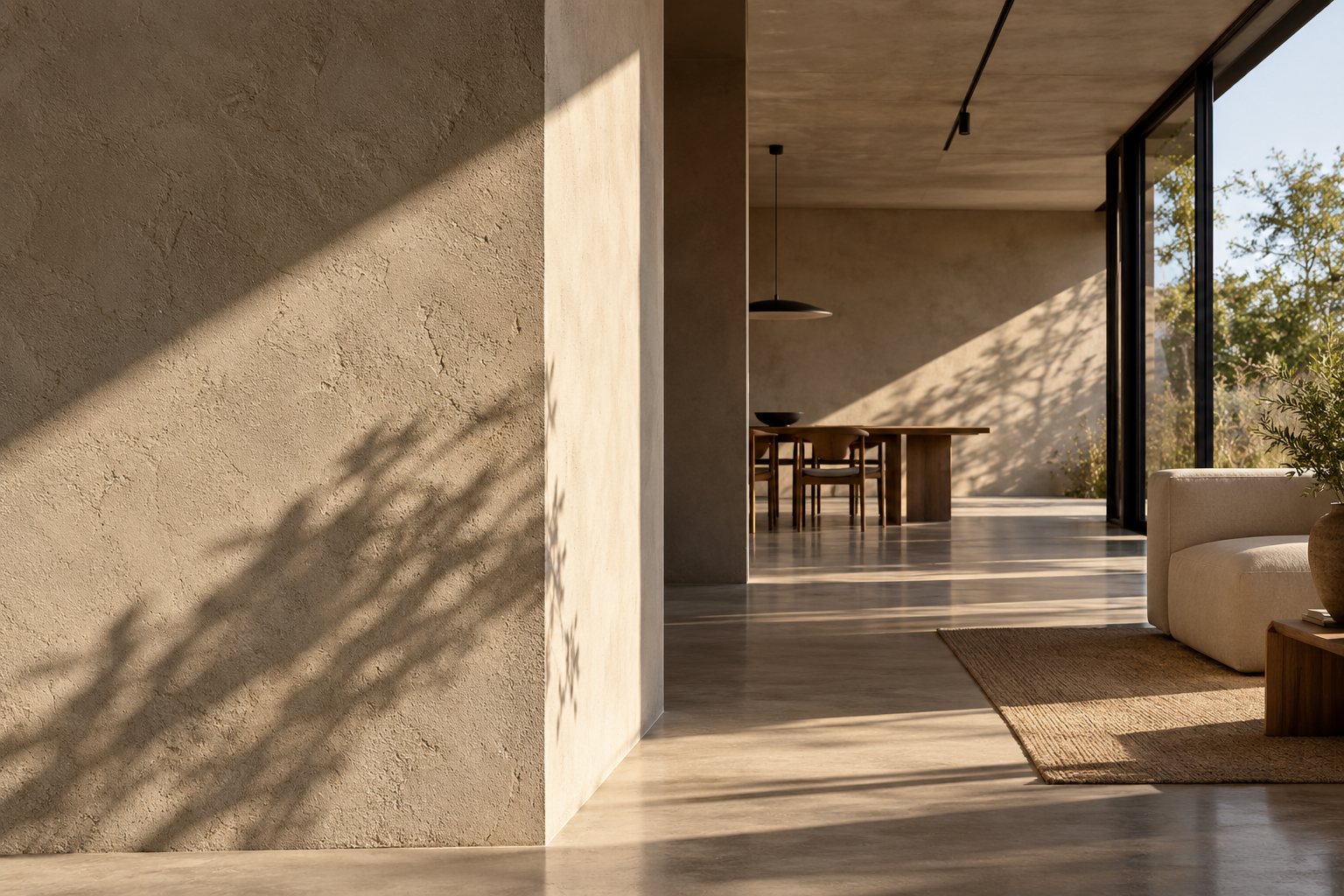
THE EXPERIENCE OF SPACE
We often know when a space feels right before we can explain why. A room can feel calm, generous and welcoming, while another of the same size can feel uncomfortable or disconnected.
The difference is rarely just about furniture, decoration or appearance. Architecture influences how we experience space through a combination of proportion, light, scale, movement and the relationship between one space and another.
Good architecture does not simply give us somewhere to be. It shapes how we move, where we pause, what we notice and how we relate to the people and environment around us.
Proportion creates balance.
Proportion is one of the quietest elements of architecture, but it can have a significant effect on how a room feels. The relationship between height, width and depth helps establish whether a space feels intimate, expansive, compressed or open.
A high ceiling can create a sense of openness. A lower ceiling can make a space feel more contained and intimate. Neither is inherently better. What matters is whether the proportions support the purpose of the space.
A successful space does not need to be dramatic. It needs to feel appropriate to the people, activities and experiences it is designed to hold.
Light changes everything.
Natural light is more than a source of visibility. It changes throughout the day, creating movement and variation within a room.
The direction of the sun, the size of an opening and the depth of a room can all affect how light enters a space. Soft, indirect light can create a calm atmosphere, while stronger directional light can emphasise texture, structure and form.
This is why windows are not simply openings in a wall. Their position, size and orientation become part of the experience of the architecture.
Scale affects how we relate to a space.
Scale is closely connected to the human body. We understand spaces through our own physical presence within them. Doorways, ceilings, corridors, stairs and furniture all provide references that help us understand the size of our surroundings.
A space can therefore be physically large without feeling welcoming. Conversely, a smaller room can feel generous when its proportions, openings and circulation have been carefully considered.
Movement gives architecture a rhythm.
Architecture is experienced over time. We rarely see an entire building at once. Instead, we move through it.
A carefully designed sequence might reveal a view gradually, transition from a darker space into natural light, or create a moment of pause before entering a larger room.
These transitions give architecture rhythm. They make the experience of moving through a building feel intentional rather than simply functional.
Context matters.
A space does not exist in isolation. Climate, landscape, culture, surrounding buildings and patterns of everyday life all influence how architecture should respond.
In places with strong sunlight and warmer climates, for example, shade, ventilation and orientation can become important architectural tools. Deep overhangs, courtyards, screened openings and carefully positioned windows can influence both comfort and character.
The most successful spaces are often those that respond naturally to where they are rather than attempting to separate themselves from their surroundings.
Architecture is not only what we see.
It is what we notice, how we move, how we feel and how a place becomes part of everyday life.